









Mechanical Engineering
In Mechanical Engineering, you’ll study the design, build, testing, and practical application of physics principles for the purpose of solving societal problems in innovative ways. In these courses you’ll learn modern en…
Overview
Build the Future
In Mechanical Engineering, you’ll study the design, build, testing, and practical application of physics principles for the purpose of solving societal problems in innovative ways. In these courses you’ll learn modern engineering methodologies and gain hands-on experience. Graduates from this program will be well prepared for manufacturing and industrial jobs requiring knowledge of automation and mechanical engineering subjects. This major is especially well suited for students who have a keen interest in robotic and mechatronic systems.

02
Chapter 02
Skills you will gain:
1. Problem solving.
Accurately assess the feasibility of a design under given constraints.
2. Practical experience.
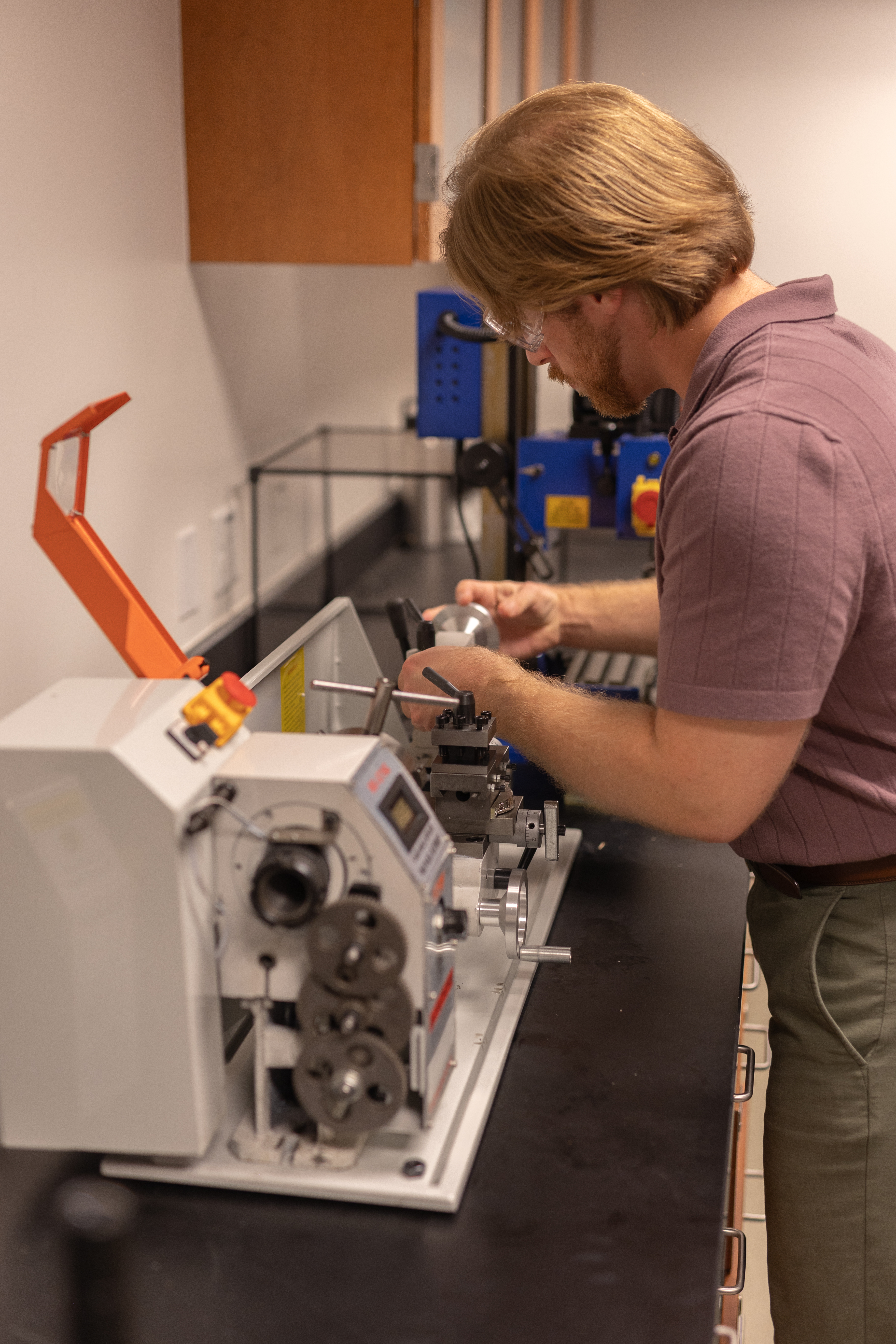
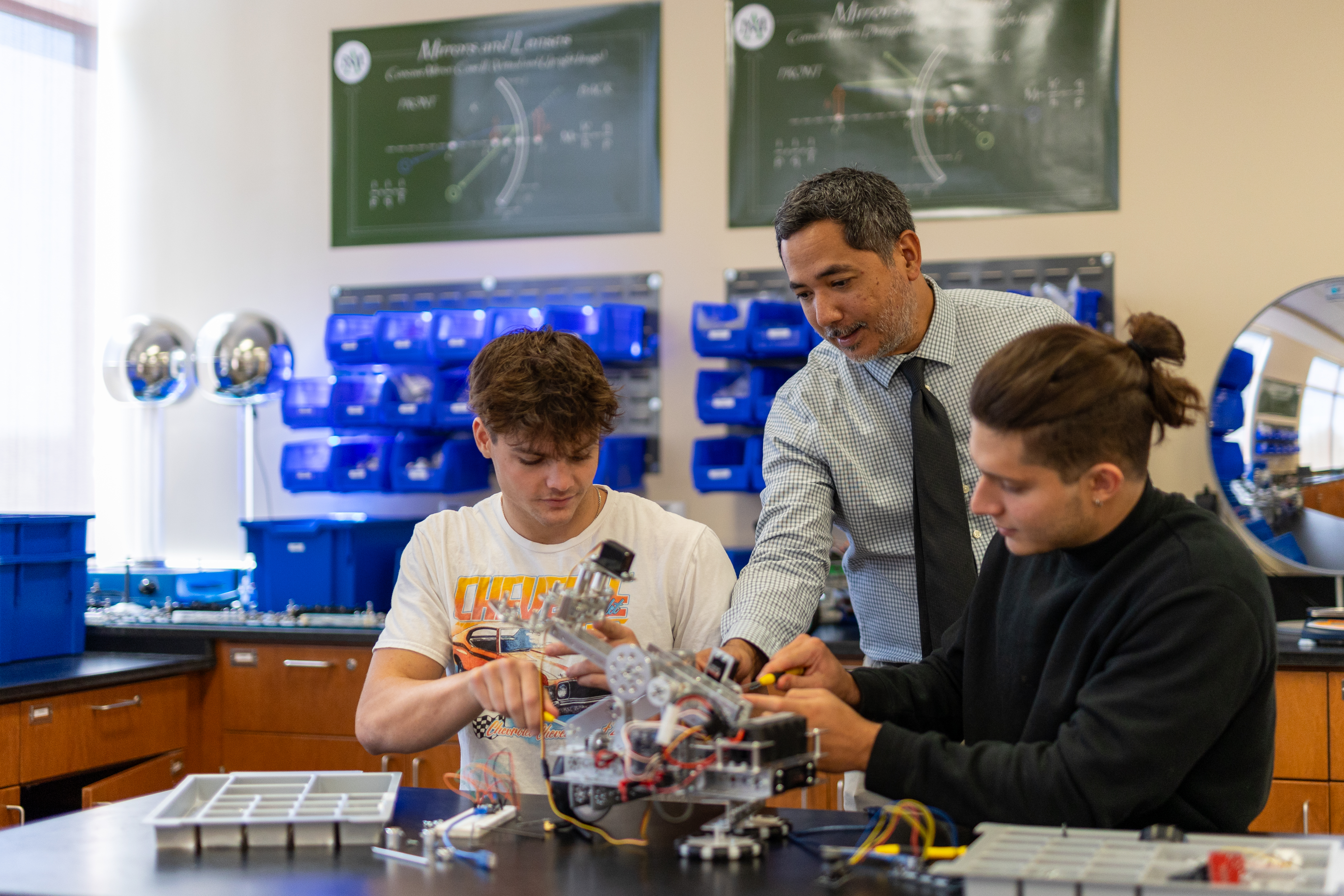
Apply your knowledge through hands-on exercises, building mechatronic assemblies, programming sensors and actuators, soldering, wiring, and validating analytical equations through experimentation.
3. Mathematical modeling.
Model systems and develop equations that predict transient and steady state behavior.
03
Chapter 03
Program Educational Objectives
- Attain professional competence as a mechanical engineer in industry or academia.
- Attain professional engineering licensure.
- Demonstrate professional growth through publications, patent development, or graduate studies.
- Integrate the principles of the Holy Catholic faith into their profession.
04
Chapter 04
Student Outcomes
By the time of graduation, the mechanical engineering student will be expected to have acquired the following competencies:
- An ability to identify, formulate, and solve complex engineering problems by applying principles of engineering, science, and mathematics.
- An ability to apply engineering design to produce solutions that meet specified needs, with consideration of public health, safety, and welfare, as well as global, cultural, social, environmental, and economic factors.
- An ability to communicate effectively with a range of audiences.
- An ability to recognize ethical and professional responsibilities in engineering situations and make informed judgments that consider the impact of engineering solutions in global, economic, environmental, and societal contexts.
- An ability to function effectively on a team whose members together provide leadership, create a collaborative environment, establish goals, plan tasks, and meet objectives.
- An ability to develop and conduct appropriate experimentation, analyze and interpret data, and use engineering judgment to draw conclusions.
- An ability to acquire and apply new knowledge as needed, using appropriate learning strategies.
Dive Deeper
Inside the Mechanical Engineering Program

Anthony DeGregoria, Ph.D.
Associate Professor of Practice in Engineering
Email: anthony.degregoria@avemaria.edu
Phone: (239) 304-7069
Office: Thomas Student Union 2007B

Alex Tsai, Ph.D., P.E.
Associate Professor of Physics and Mechanical Engineering; Director of Engineering Program
Email: alex.tsai@avemaria.edu
Phone: (239) 280-1607
Office: Henkels 2047
Take the Next Step
Ready to begin your journey in Mechanical Engineering?
Apply today, request more information, or talk with an admissions counselor about how this program fits your vocation.